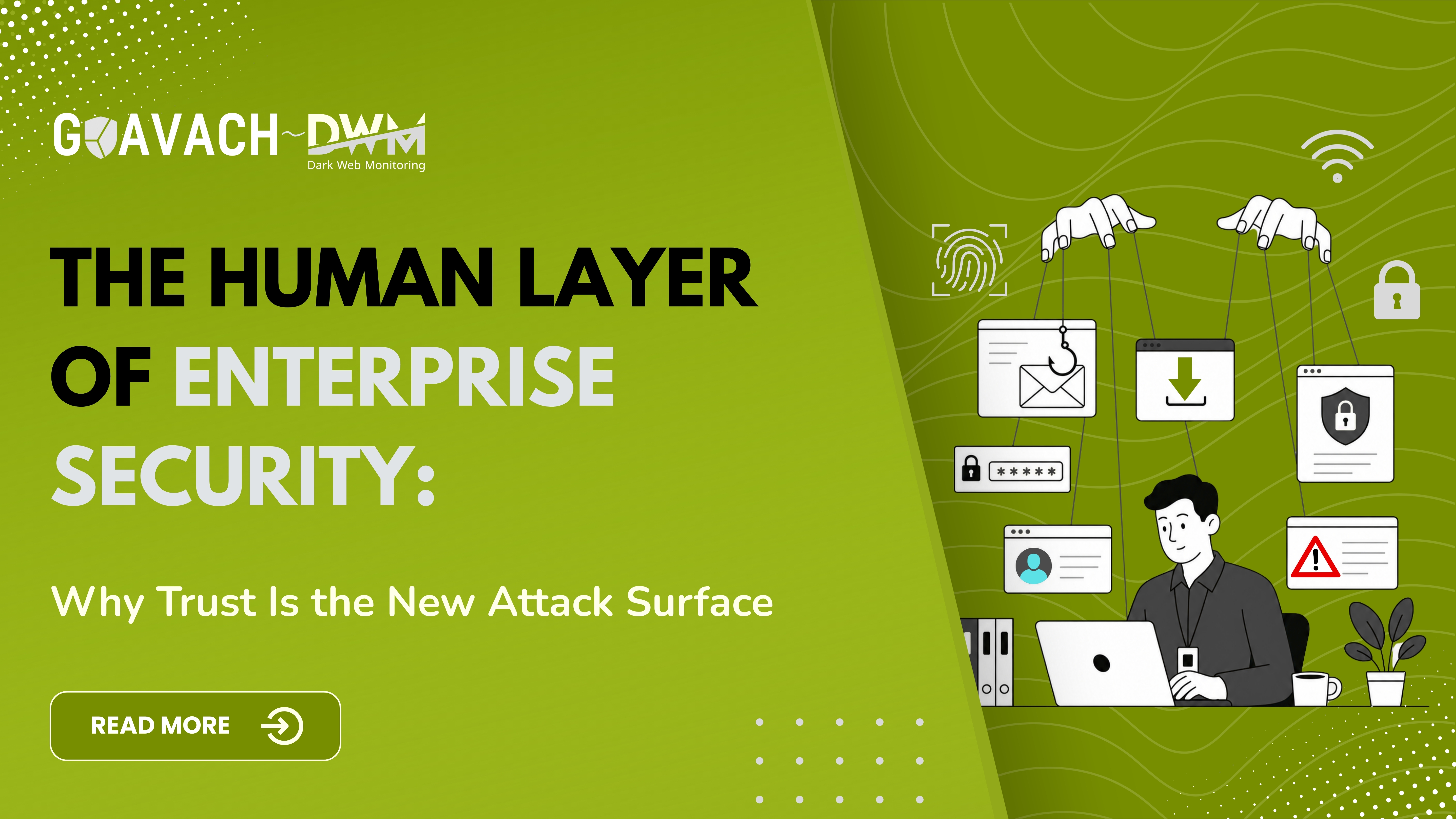
The Human Layer of Enterprise Security: Why Trust Is the New Attack Surface
For decades, enterprise cybersecurity has focused on protecting technology.
Organizations invested heavily in firewalls, endpoint protection, intrusion detection systems, vulnerability scanners, and sophisticated monitoring platforms. Every year, security tools became faster, smarter, and more automated.
Yet despite these investments, successful breaches continue to rise.
Why?
Because modern attackers increasingly bypass technology altogether.
Instead of attacking systems, they attack people.
Today, the easiest way into an enterprise is often not through an unpatched server or a vulnerable application, but through a trusted employee, contractor, vendor, or executive. Cybercriminals have realized that trust itself has become one of the most valuable assets inside an organization, and one of the easiest to exploit.
In 2026, the human layer has become the newest attack surface, making trust one of the biggest security challenges enterprises face.
The Evolution of Enterprise Attacks
Traditional cyberattacks were largely technical.
Attackers searched for software vulnerabilities, weak passwords, exposed databases, or misconfigured infrastructure. Security teams responded by strengthening technical defenses through patch management, network segmentation, and continuous monitoring.
Today's attacks look very different.
Threat actors now spend significant time researching the people behind an organization before launching an attack.
They gather publicly available information from:
- LinkedIn profiles
- Company websites
- Social media platforms
- Press releases
- GitHub repositories
- Conference presentations
- Job postings
This information allows attackers to build highly convincing identities and impersonate trusted individuals.
Rather than forcing their way into a network, they persuade someone inside the organization to open the door.
Why Humans Have Become the Preferred Target
Security technologies continue to improve.
People, however, remain naturally trusting.
Employees are expected to collaborate quickly, share information, approve requests, and respond to urgent business needs. Modern workplaces encourage openness and rapid communication across email, Microsoft Teams, Slack, Zoom, and countless SaaS platforms.
Attackers exploit exactly these expectations.
Instead of breaking security controls, they manipulate human behavior.
Common techniques include:
Business Email Compromise (BEC)
Executives are impersonated to request urgent wire transfers, payroll changes, or confidential financial information.
Credential Phishing
Employees receive convincing login pages that perfectly imitate Microsoft 365, Google Workspace, VPN portals, or internal applications.
Help Desk Social Engineering
Attackers convince IT staff to reset passwords or enroll new MFA devices by pretending to be legitimate employees.
Vendor Impersonation
Trusted suppliers request invoice updates, payment changes, or document approvals using compromised accounts.
Recruitment Scams
HR departments receive resumes or portfolios containing malicious files or credential harvesting links.
Each attack relies on one thing:
Trust.
The Anatomy of Human-Centric Attacks
Understanding how modern social engineering campaigns unfold reveals why traditional security controls often fail to detect them. Most attacks follow a structured progression, gradually building credibility before exploiting human trust.
1. The Research Phase (Building Trust Before Contact)
Before making contact, attackers invest time in understanding the organization.
They identify:
- Executive leadership
- Department structures
- Vendor relationships
- Technology platforms
- Corporate branding
- Recent business announcements
- Employee responsibilities
By combining public information with leaked credentials from previous breaches, attackers can create detailed profiles of their targets.
The more they know, the more believable they become.
2. The Engagement Phase (Establishing Credibility)
Rather than sending obvious phishing emails filled with spelling mistakes, modern attackers imitate legitimate business communication.
They may:
- Register lookalike company domains
- Clone login portals
- Reply within existing email threads
- Use AI-generated writing that matches corporate communication styles
- Reference real colleagues, ongoing projects, or recent meetings
The victim sees nothing unusual.
The request appears authentic because it aligns with normal business operations.
Trust replaces suspicion.
3. The Exploitation Phase (Turning Trust into Access)
Once trust has been established, attackers encourage the victim to perform seemingly routine actions:
- Approving an MFA request
- Opening a shared document
- Downloading an invoice
- Logging into a cloned authentication portal
- Updating payroll information
- Sharing confidential documents
These actions appear harmless.
Behind the scenes, attackers gain:
- Valid credentials
- Active session tokens
- Multi-factor authentication approvals
- Internal communications
- Sensitive business information
Since legitimate users performed the actions themselves, many security systems detect nothing unusual.
4. The Expansion Phase (From One User to Enterprise Compromise)
With legitimate access obtained, attackers begin expanding their foothold.
They may:
- Access cloud applications
- Read executive email conversations
- Harvest additional credentials
- Enumerate internal systems
- Move laterally across departments
- Exfiltrate confidential documents
What started as a single successful phishing email can quickly evolve into a large-scale enterprise breach affecting finance, HR, legal, customer data, and intellectual property.
Why Traditional Security Isn't Enough
Organizations often believe that deploying more security products automatically reduces risk.
However, many traditional security tools were designed to detect malicious software, not manipulated humans.
A firewall cannot determine whether an employee willingly entered credentials into a fake login page.
An antivirus solution cannot recognize that a finance employee approved a fraudulent payment because they believed the request came from their CEO.
Even identity systems struggle when attackers successfully authenticate using legitimate credentials.
To the technology, the user appears genuine.
The compromise occurred before the login ever happened.
Building a Human-Centric Security Strategy
Reducing human risk requires more than annual security awareness training.
Organizations must continuously strengthen both human awareness and technical visibility.
A modern strategy includes:
Continuous Security Awareness
Employees should regularly learn how attackers adapt their tactics, recognize social engineering techniques, and report suspicious activity.
Identity Protection
Strong authentication, adaptive MFA, least-privilege access, and continuous identity monitoring help reduce the impact of compromised accounts.
External Threat Intelligence
Organizations need visibility into leaked credentials, exposed employee information, phishing infrastructure, and impersonation attempts before attackers can use them.
Brand Protection
Monitoring lookalike domains and fraudulent websites enables security teams to take action before employees or customers become victims.
Continuous Credential Monitoring
Compromised credentials often appear on underground marketplaces weeks before they are used in an attack.
Early detection allows organizations to reset passwords, revoke sessions, and investigate suspicious activity before attackers gain access.
Strengthening the Human Layer with GKavach~DWM
Modern identity attacks often begin long before employees receive a phishing email.
Attackers first gather intelligence, identify exposed credentials, register fake domains, and monitor organizational activity to maximize the success of their campaigns.
GKavach~DWM helps enterprises identify these external risks before they evolve into full-scale compromises by providing continuous visibility into the evolving threat landscape.
Its capabilities include:
Continuous Dark Web Monitoring
Detect leaked corporate email addresses, credentials, authentication data, and sensitive information circulating across underground forums, marketplaces, and encrypted channels.
Brand Impersonation Detection
Identify fraudulent domains, phishing websites, and brand abuse designed to deceive employees, partners, and customers.
Credential Exposure Monitoring
Receive immediate alerts whenever employee credentials appear in newly discovered breach datasets, enabling rapid remediation before attackers exploit them.
Digital Footprint Visibility
Monitor publicly exposed assets and external intelligence that attackers frequently use during reconnaissance.
Proactive Risk Alerts
Provide security teams with actionable intelligence, enabling faster response to emerging threats before trust is weaponized against the organization.
Conclusion: Security Begins with Trust
Technology continues to evolve, but so do attackers.
Rather than fighting hardened infrastructure, cybercriminals increasingly exploit relationships, identities, and human behavior to achieve their objectives. Every email, login request, payment approval, and collaboration tool has become a potential avenue for compromise when trust is abused.
Protecting the modern enterprise therefore requires more than stronger technical controls. It demands continuous visibility into the external signals that attackers rely on, such as exposed credentials, impersonation campaigns, leaked information, and emerging phishing infrastructure.
Organizations that treat the human layer as part of their attack surface, rather than simply their last line of defense, are far better positioned to detect threats early, reduce risk, and build lasting cyber resilience in an increasingly trust-driven digital world.