Phishing, QR Scams, and the Dark Web: How Stolen Data Moves Through a Hidden Cybercrime Chain
When a Simple Scan Becomes Something Bigger
Most QR scans feel harmless in everyday life. You see them at shops, in delivery messages, at payment counters, or inside SMS updates, and you scan them without thinking twice.
The problem is not the scan itself. The real risk begins after it.
A QR code or phishing page is often just the entry point into a much larger system where stolen information is collected, reused, and eventually sold in underground networks.
Understanding this chain is important because modern cyberattacks are not isolated events. They are connected steps that continue even after the first mistake happens.
How QR Scams and Phishing Work Together
QR scams are not separate from phishing. They are simply another way of delivering it.
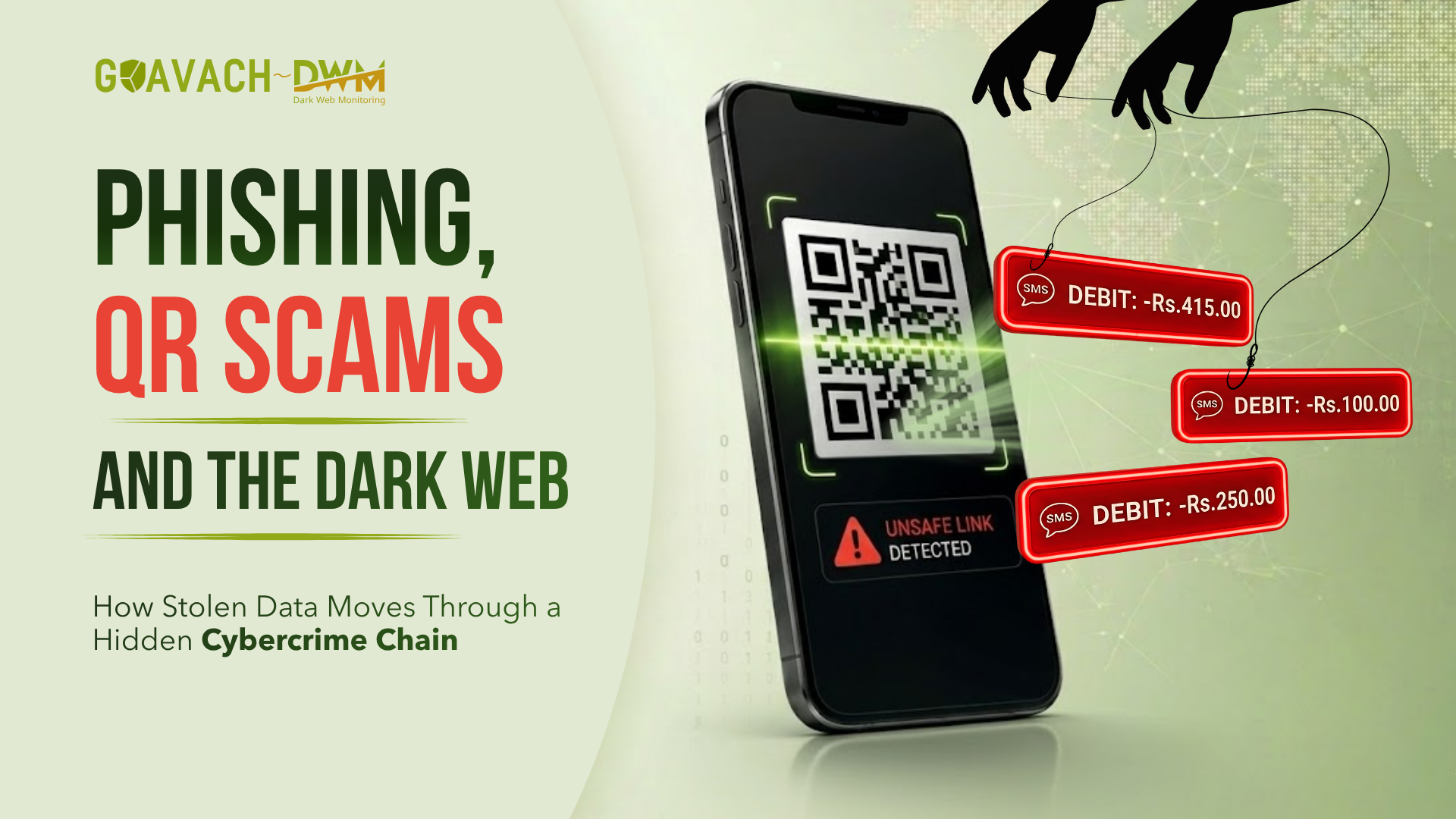
Instead of clicking a visible link, users scan a QR code that hides the destination. Once scanned, the user is redirected to a page controlled by attackers.
This method works because QR codes feel familiar and safe. People are used to using them for payments and services, so they rarely question them.
After scanning, users are often taken to:
-
Fake login pages
-
Payment verification screens
-
Refund or reward forms
-
OTP or account recovery pages
At this stage, the victim is usually unaware that anything suspicious is happening.
Real Case in Nepal: QR Refund Scam (2024)
A 2024 incident involving an e-commerce platform in Nepal shows how effective QR phishing can be in real situations.
Customers received SMS messages claiming they were eligible for refunds. The messages looked official and used urgent language to push quick action.
Typical messages included:
-
Your refund has been approved
-
Scan the QR code to complete the return
-
The refund will be processed immediately
Because the message matched normal customer service communication, many users trusted it.
When users scanned the QR code, they were redirected to a fake refund page that looked like the real platform.
The page asked for sensitive details such as:
-
Order ID
-
Personal information
-
Bank account details
-
OTP codes
Once entered, this information was immediately captured by attackers.
What Happened After the Data Was Entered
The impact of the scam went beyond the initial QR scan.
Attackers used the stolen information to access user accounts and perform unauthorized actions. In many cases, saved payment methods were also misused.
The consequences included:
-
Account takeovers
-
Unauthorized purchases
-
Password resets by attackers
-
Users being locked out of their accounts
In total, more than 150 users were affected, with losses estimated at around NPR 2.8 million.
The platform had to respond by improving security systems, adding stronger authentication, and monitoring suspicious activity patterns.
However, by the time action was taken, the attackers had already moved beyond the first stage of the attack.
Why This Scam Worked So Effectively
This type of attack does not rely on advanced hacking techniques. It relies on behavior and timing.
Several factors made it successful:
-
The message looked like a normal service update
-
QR codes felt familiar and trustworthy
-
Users did not expect fraud in refund communication
-
Urgent language reduced careful checking
-
Fake pages closely resembled real systems
In some cases, attackers also used previously leaked data to make messages more convincing, which increased trust and reduced suspicion.
What Happens After Credentials Are Stolen
Once attackers collect user data, the process continues beyond the initial scam.
Stolen credentials are often tested immediately to check account access. If successful, attackers move quickly to exploit financial or personal information.
After that, the data typically goes through a longer cycle:
-
It is organized into structured lists
-
Combined with other leaked datasets
-
Shared or sold in underground communities
-
Reused in future phishing or fraud attempts
Over time, this data may appear on leak sites or dark web marketplaces where it is traded multiple times.
This means a single QR scan can lead to repeated exposure long after the original incident.
Why QR Scams Are Becoming More Dangerous
QR phishing is growing because it fits naturally into everyday behavior.
Unlike traditional phishing links, QR codes:
-
Hide the actual destination until scanned
-
Are used in physical and digital environments
-
Blend into payment and service systems
-
Require no technical skill to deploy
As QR-based payments and services expand, attackers get more opportunities to place malicious codes in places users already trust.
This makes QR scams harder to detect in real time without additional tools.
The Need for Continuous Protection
One-time awareness is not enough anymore. Modern cyber threats evolve continuously and often resurface long after the initial attack.
Users need protection that works in real time and continues after exposure.
Effective protection today requires:
-
Checking QR codes before opening them
-
Identifying suspicious redirects
-
Monitoring data exposure over time
-
Receiving alerts when information appears in leaks
Without these layers, users are left exposed to both immediate scams and long-term risks.
How GKavach~DWM Helps Reduce Risk in QR-Based Attacks
Cyber threats like QR phishing require instant response because the risk happens the moment a user interacts with a malicious code. GKavach~DWM is designed to work at different stages of this process instead of relying on a single point of protection.
QR Code Scanner as a Safety Shield
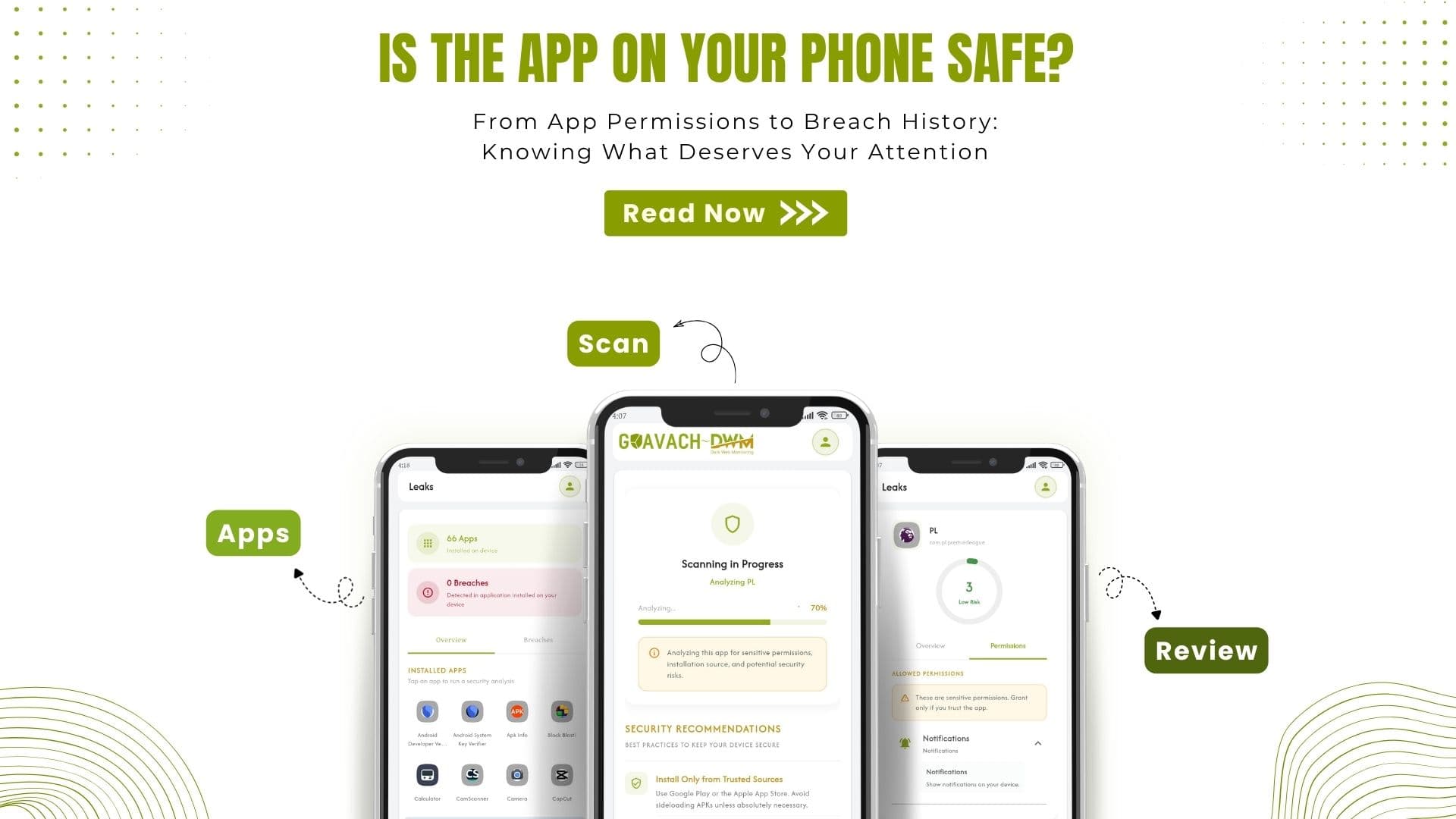
At the core of this protection is the GKavach~DWM QR Phishing Checker, which evaluates QR codes before any link is opened.
Instead of allowing direct access to scanned content, it helps identify whether a QR code leads to a trusted or potentially suspicious destination. This is crucial because QR phishing attacks often disguise fake login pages or payment portals behind seemingly normal codes, giving users little to no warning before interaction.
By introducing verification at the scanning stage, GKavach~DWM reduces the likelihood of users entering unsafe environments from the very beginning.
Users can access the QR phishing check feature directly through the GKavach~DWM app, available on both the Google Play Store and Apple App Store. For quicker use in time-sensitive situations, the same functionality can also be added as a home screen widget, allowing faster access without opening the full app.
Conclusion: One Scan Can Start a Chain Reaction
QR scams, phishing attacks, and dark web leaks are not separate issues. They are connected stages of the same cybercrime chain.
A single QR scan can lead to fake login pages, credential theft, account access, financial fraud, and eventually data resale in underground markets.
What makes this dangerous is not only the first attack, but everything that happens after it.
This is why cybersecurity today cannot rely on one-time awareness. It requires continuous protection, real-time detection, and fast response tools.
Because once data enters this chain, it does not stay in one place. It keeps moving, long after the scan is over.